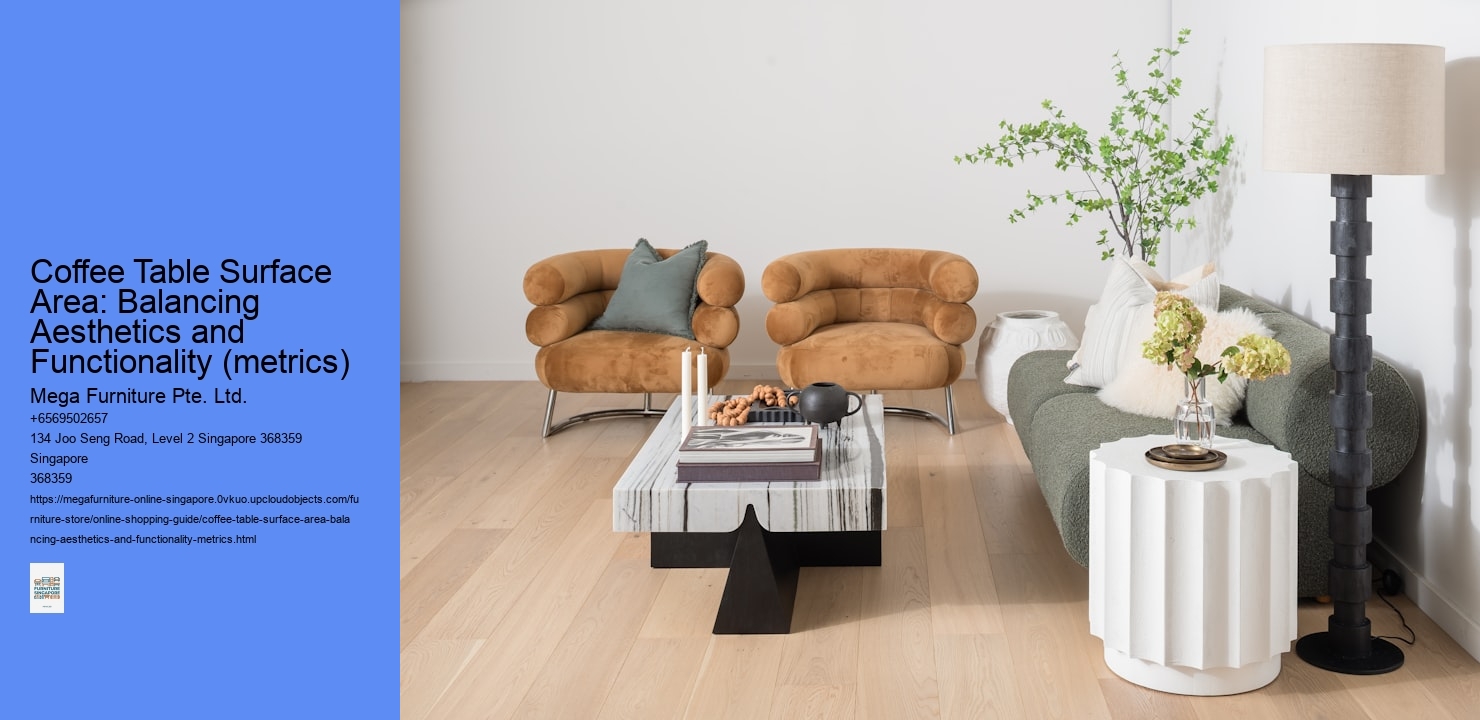
A 130-centimetre rectangular table in a 4-metre-wide HDB living room leaves just enough room to walk past—that’s the unspoken rule of functional surface area. It’s the difference between a table that serves the sofa and one that commands the entire floor plan. Primary surface area is the table’s top dimensions, the numbers on the spec sheet. Accessible surface area, however, is what you can actually use without stretching over a sofa cushion or navigating around a sharp corner; it’s the real geometry of living.
Consider the common local layout: a three-seater sofa facing a media console. A table that’s too long forces you into a sidestep shuffle along its length, while one that’s too deep becomes a barrier to the TV console. The 130cm example works because it typically aligns with the seated width of that sofa, leaving clear pathways on either side in a standard HDB living room. Its functional zone is defined not just by its own footprint, but by the 45 to 60 centimetres of clearance you’ll want around it.
Scale shifts dramatically in a compact Punggol condo’s lounge area, where every centimetre of circulation space is precious. An 80cm circular table suits these tighter plans perfectly—its lack of corners softens the visual footprint and eliminates hazardous edges in narrow walkways. The accessible surface is nearly equal to the primary area, as you can approach it from any angle; it becomes a central hub rather than a linear obstacle.
Shape directly dictates this functionality. A rectangular table organises a room along a clear axis, which can centre a formal seating arrangement. An oval or round design, by contrast, encourages flow and conversation, often feeling less obstructive in open-plan condo layouts. That’s why a sculptural, irregular design might claim more visual attention than actual usable space—a trade-off every buyer must weigh.
Material choice reinforces this geometry. A solid timber rectangular table grounds a space with its defined edges, while a glass-topped round table seems to disappear, maximising a sense of openness in that 12 sqm combined living-dining area. The final measurement isn’t just length and width; it’s how much living you can comfortably fit around it.
In many newer BTO flats, that three-seater sofa often ends up just a metre from the TV console, leaving a living room width of maybe 3.8 metres to play with. That’s the reality for a lot of buyers in Punggol or Tengah; your coffee table isn’t just a centrepiece, it’s a navigation hazard if it’s too wide. Aim for a table length around 90cm to 110cm in these spaces—anything longer starts to feel like an obstacle course, especially when you’re trying to vacuum around it on a Sunday morning.
Resale HDB flats, particularly those older units in neighbourhoods like Bedok or Queenstown, often offer a more generous floor plan. A 4.5-metre wide living room can comfortably handle a longer, 130cm rectangular table or even a substantial oval piece, which becomes a proper anchor for the seating area. Condo living rooms vary wildly, from the compact layouts in city-fringe projects to the expansive, open-plan volumes in some suburban developments; the key is to maintain at least 60cm of clear walking space around the table’s perimeter for that essential visual flow.
This is where landed property living rooms operate on a different scale entirely—they can absorb a 150cm-long table or a pair of large nesting tables without a second thought, a luxury that makes most HDB dwellers quietly envious. Back in a typical 12 sqm BTO living room, an oversized table doesn’t just impede movement; it visually chops the room in half, making the entire space feel cramped and cluttered even when it’s technically clean.
The shape you choose follows from these size constraints. A round or oval table around 90cm in diameter can be a smarter choice for tighter layouts, as it eliminates sharp corners and guides traffic around its edges more naturally. For those with a bit more room to manoeuvre, a rectangular table offers better proportion against a standard sofa, but keep its height around 40cm so it doesn’t dominate the sightlines. There’s a practical limit to generosity—a table that’s too large for its room becomes a permanent fixture you’re always apologising to guests for.
Solid teak’s high oil content gives it a natural defence against Singapore’s humidity, which often pushes past 80% in unventilated HDB living rooms. It won’t warp or swell like many cheaper woods, even when a toddler spills a full cup of water and it sits unnoticed for an hour. That stability comes at a cost — a 120cm teak coffee table typically ranges from $1,200 to $2,400, a premium over engineered options. The grain is dense and heavy, which means it can withstand years of active use, from homework sessions to board game nights, without showing superficial dents. Its colour does darken over time, a characteristic many buyers in neighbourhoods like Tampines or Bedok actually appreciate for the lived-in look.
Engineered wood, often a plywood core with a veneer, is the budget-friendly choice for a 4-room BTO where the budget is tight after the sofa purchase. The layered construction resists uniform warping better than solid wood planks in high humidity, but the thin surface layer can be vulnerable. A hot mug left directly on it, or a pet’s claws scratching during play, can damage the finish irreparably. It’s a pragmatic option for the first five years, especially in a condo where the air conditioning moderates moisture. You’ll find it’s the most common material in many ready-to-assemble collections, offering a clean, modern look at around $400 to $800.
Sintered stone is essentially a ceramic surface fired at extreme heat, resulting in a slab that laughs at both humidity and household accidents. It doesn’t absorb moisture at all, so a spilled iced tea or a humidifier running nearby won’t cause any swelling or staining. Its heat resistance is superior to natural marble — you can place a hot pot from the kitchen directly on it without a trivet and see no damage. The material is also remarkably scratch-resistant, which makes it ideal for homes with children who might drag toys across the surface. While it carries a premium price, its durability in an active household often justifies the investment.
A matte, textured finish or a heavily lacquered surface is crucial when you have dogs or cats that might treat the coffee table as part of their playground. Glossy surfaces show every single claw mark, while a durable oil-based finish or a commercial-grade lacquer can absorb minor scratches without revealing a different coloured substrate underneath. Avoid soft, open-grained woods like some Sheesham varieties; they can trap odours and are harder to clean after pet-related incidents. The finish should also resist common cleaning chemicals, because wiping down after pets is a weekly ritual in many homes. It’s a practical consideration that often outweighs pure aesthetics for buyers in pet-friendly condos.
Glass tables offer a light, airy feel in compact living rooms, but the thickness and treatment are non-negotiable for child safety. A minimum of 10mm tempered glass is essential — it’s far less likely to shatter into dangerous shards if a child falls against it or a heavy object is dropped. The edges should be smoothly polished or rounded, not sharp, to prevent cuts during the inevitable rough-and-tumble play around the sofa. Placement is also key; in a tight layout, ensure it’s not in a direct pathway where a running child might collide with it head-on. That combination of material specification and spatial planning turns a potential hazard into a secure, functional centrepiece.
The sculptural coffee table that looks perfect in a Tiong Bahru showroom flat often becomes a daily nuisance in a 4-room BTO — all curves and no place for a charging cable or a proper mug. This is the core tension in Singapore: balancing that centrepiece ambition with the realities of 12-hour days and 12 sqm living rooms. Buyers frequently err by prioritising a pure aesthetic statement, choosing an irregular, artful form that offers no usable flat surface; it’s a sculpture you have to dust, not a functional piece for remotes, coasters, and the occasional supper tray.
Then there’s the overlooked heft of the thing. In many homes, from older HDBs in Bedok to newer condos in Paya Lebar, the coffee table gets pushed aside for yoga, family gatherings, or just a different feel. A solid marble or thick rubberwood piece might weigh 40kg or more, turning a simple rearrange into a two-person logistical ordeal. Lightweight materials like engineered wood or hollow metal frames offer more flexibility, but they often trade off on that prized, substantial feel.
Scale is another frequent miscalculation, largely because online photos are shot in vast, deceptive studios. A table listed as 120cm long can visually swallow a compact seating area when it arrives, or leave a frustrating 70cm gap that breaks the conversational circle. The rule for clearance is typically 40–50cm between the sofa edge and the table — enough for knees and a natural reach, without creating a moat. Forgetting this, and the home’s specific storage needs, means a beautiful new table simply adds to the clutter it was meant to organise.
Finally, there’s a tendency to see the coffee table in isolation, not as part of a daily circuit. It needs to work with the sofa height for comfort, the flooring type (will metal legs scratch polished porcelain?), and the household’s rhythm. A glass top might look crisp in a showroom, but in a home with young kids in Sengkang, it becomes a fingerprint magnet requiring constant wiping. The most successful choices are those that concede a little artistic purity for a lot of lived-in function.


The difference between a sintered stone coffee table that feels like a cold slab of granite and one that feels like a cheap laminate tile is impossible to gauge on a website. You’ll only know by touching it. That’s why a showroom visit isn’t an optional extra; it’s the final verification step before a purchase that could anchor your living room for a decade. Megafurniture’s Joo Seng and Tampines showrooms provide this tactile audit under realistic lighting conditions—not the sterile glow of a warehouse, but the kind of ambient light you’d have in a Tampines condo or an Aljunied HDB at dusk.
Physical assessment goes beyond a cursory glance. You need to test the sturdiness of a solid rubberwood frame by applying a bit of pressure, open and close every drawer to check for smooth gliding and alignment, and run a hand along the edges of a marble-top piece to feel for a crisp, polished finish versus a rough, unfinished seam. The texture of a performance velvet finish on a metal base, or the subtle grain of a full-grain leather wrap, reveals itself only in person. It’s a process that confirms whether the advertised “heirloom quality” joinery is merely marketing or something you can actually see in the dovetail joints.
This verification also solves the perennial spatial puzzle in Singapore homes. A 120cm-long rectangular coffee table might look proportionate online, but in a 4-room BTO living room with a 2.8-meter sofa, it can suddenly feel dwarfed or, worse, obstructive. Standing beside it in the showroom, you get a true sense of its presence and scale, how much floor space it truly commands, and whether its height—typically around 42cm—aligns comfortably with your sofa’s seat level. That moment of spatial confirmation prevents the costly error of ordering a piece that arrives and immediately feels wrong.
There’s a mild opinion to offer here: for a piece as central as a coffee table, where you’ll interact with its surface daily, material feel and structural integrity matter more than a slight price discount. A glass table that feels insubstantial when you place a drink on it, or an engineered wood piece with a veneer that looks pixelated under natural light, will grate every time you use it. The showroom visit allows you to filter out those disappointments before they enter your home. You can browse the options at Megafurniture’s showrooms and make a choice grounded in physical reality, not digital assumption.
The surface area of a rectangular coffee table is calculated by multiplying its length by width, providing a primary zone for functional placement. This straightforward geometry offers ample linear space for books, trays, or decorative runners, supporting both organization and display. Its shape naturally complements sectional sofas and longer walls, making it a versatile choice for balancing substantial surface utility with clean-lined aesthetics.
A square coffee table's surface area is derived from squaring its side length, creating a balanced and centralized focal point in a seating area. This equal-sided form promotes accessibility from all surrounding seating, enhancing conversational functionality. The harmonious proportions lend themselves to symmetrical styling, allowing for aesthetically pleasing arrangements of centerpieces or collections without visual imbalance.
An oval table's area, calculated using its major and minor axes, provides a continuous surface without sharp corners, enhancing safety and flow. The soft, elongated form offers generous usable space while facilitating easier movement around the furniture, a key functional metric. Its elegant curves introduce an organic aesthetic that can soften the lines of a contemporary room, merging graceful form with practical surface coverage.
The surface area of a round coffee table is determined by the formula πr², creating a space-efficient footprint that encourages social interaction. With no corners, it maximizes usable perimeter for drinks and items within a compact overall dimension, a crucial space-saving metric. Its continuous edge allows for unbroken sightlines in the room, contributing to an aesthetic of unity and fluidity in the layout.
Freeform or organic-shaped tables, like amoeba or river designs, have surface areas best measured by direct calculation, offering unique functional zones. These tables provide distinct areas for different uses—a wider section for display, a narrower curve for accessibility—blending bespoke aesthetics with tailored functionality. The irregular perimeter creates visual interest and becomes a sculptural centerpiece, where the metric of usable space is creatively integrated into the artistic form.
That solid marble rectangle you’ve chosen looks stunning online, but its journey into your fourth-floor HDB flat is where the practicalities begin. Singapore’s standard HDB lift interior height is 2.1 metres — a critical figure that determines whether your new centrepiece arrives at your door or gets stranded in the loading bay. For most coffee tables, it’s a non-issue, but oversized sculptural pieces or those shipped fully assembled in a tall crate can hit a literal ceiling.
Lead times are the next reality check. If you’re ordering a standard model from local warehouse stock, you might see it in a week. Imported, custom-order, or solid stone pieces typically require a two to three week wait; that’s for shipping, customs clearance, and local quality checks. It’s a good buffer to plan your living room refresh around.
Assembly scope varies wildly. A simple four-legged wooden table might just need its feet screwed on, a five-minute job. Complex designs with integrated storage, irregular shapes, or heavy stone tops often recommend professional installation — it’s not just about tools, but ensuring the piece is perfectly level and stable on your living room floor. Skipping this for a heavy sintered stone top is a fast track to a chipped corner or a wobbly fit.
Finally, understand what your warranty actually covers. Structural defects in frames or legs are typically covered for one to three years. The finish, however, is a different story. Most warranties exclude natural wear, water rings from glasses, or scratches — which, let’s be honest, are the main threats a coffee table faces in a household with kids or regular entertaining. That beautiful oiled walnut finish will patina with use; it’s a feature, not a flaw, but it won’t be replaced for free.
After the sofa’s in place, the coffee table questions start—and they’re always about the practicalities of Singaporean living. Here’s how to handle the most common ones.
What size for an L-shaped sofa in a 5-room HDB? Aim for a rectangular table around 120cm to 140cm long. That gives you about 60cm of clearance from each seating section, enough for a drink and a phone without anyone stretching. It’s a common mistake to go too small; a 90cm table gets lost visually and functionally in that layout.
Can a marble top handle hot plates? Typically, no—direct heat risks thermal shock and permanent etching. Use a trivet or coaster every single time. For a similar luxe look without the fuss, sintered stone is engineered to resist heat and stains, which makes it a pragmatic favourite for open-concept kitchens that bleed into the living area.
Best shape for a narrow walkway? An oval or round table with a diameter under 100cm is your safest bet. The lack of sharp corners prevents bruised shins in tight spaces, common in older HDB layouts where the living room doubles as a thoroughfare to the balcony. A sculptural, irregular shape can work too, provided its footprint is compact and its edges are softened.
How to clean sintered stone versus wood? For sintered stone, a damp microfibre cloth with pH-neutral soap is all you need; avoid abrasive pads that can create fine scratches. For solid wood, you’ll want to dust first, then use a barely-damp cloth followed by immediate drying to prevent moisture marks—humidity here is the real enemy, not the occasional coffee spill.
That last-minute hesitation in the showroom, the nagging doubt after you’ve paid the deposit — it almost always stems from a skipped step. A concrete checklist is your defence against buyer’s remorse, turning abstract worry into a series of simple, physical actions.
Start with the room itself. Uncoil your tape measure and note the exact dimensions between your sofa and media console; in many 4-room BTO layouts, that’s a corridor of just 80 to 100cm. Then, mark the proposed table’s footprint on your floor using masking tape or newspaper. Live with that outline for a day — you’ll quickly see if it blocks a natural walking path to the balcony or makes the space feel cramped.
Next, audit your daily clutter. Lay out every item that will live on this surface: two remotes, a laptop, three coasters, perhaps a stack of design magazines. That visual pile dictates the functional surface area you truly need, far more reliably than any style preference. It also flags potential conflicts; a glass top might look sleek, but it’ll show every watermark from those coasters in a household that favours iced teh.
Now, match the material to your reality. A honed marble top is a stunning centrepiece, but it’s a porous, high-maintenance choice for a home with young kids or pets prone to jumping. Engineered wood or a textured sintered stone often proves more forgiving for daily life in a Tampines condo or an HDB flat. If you’ve fallen for a specific piece at a showroom, go back for a second look — check the finish under daylight bulbs, open any drawers, and test the stability.
Finally, confirm the practicalities. Measure your lift lobby and front door to ensure the delivery team won’t face an impossible turn; a large, solid wood slab might only make it into a ground-floor unit. Clarify who handles assembly and whether old table removal is included. Only then, with tape peeled from the floor and logistics settled, should you proceed to payment.